
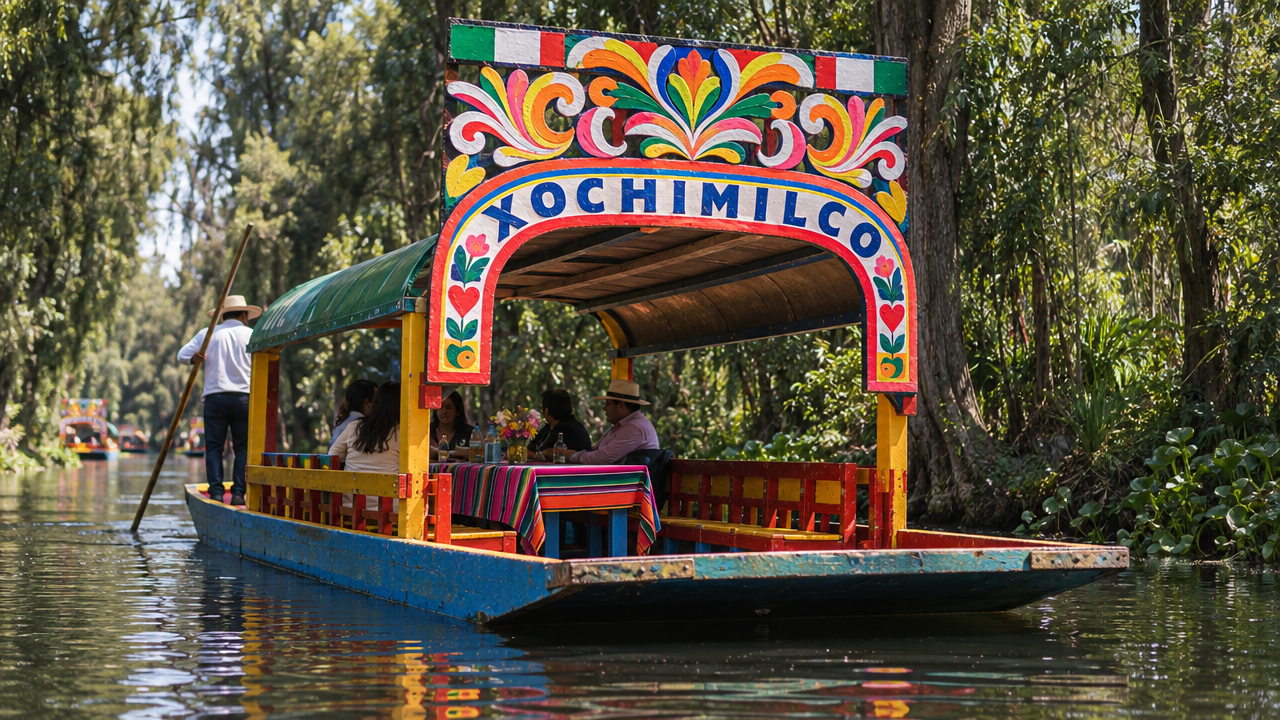
Just a short trip from the skyscrapers of Mexico City lies a place where past, present, and future seem to mix together… Xochimilco, where urban and rural, ancient and modern, collide in the most unexpected way, a living patchwork of canals, floating gardens, and centuries-old farming wisdom still humming with life today.
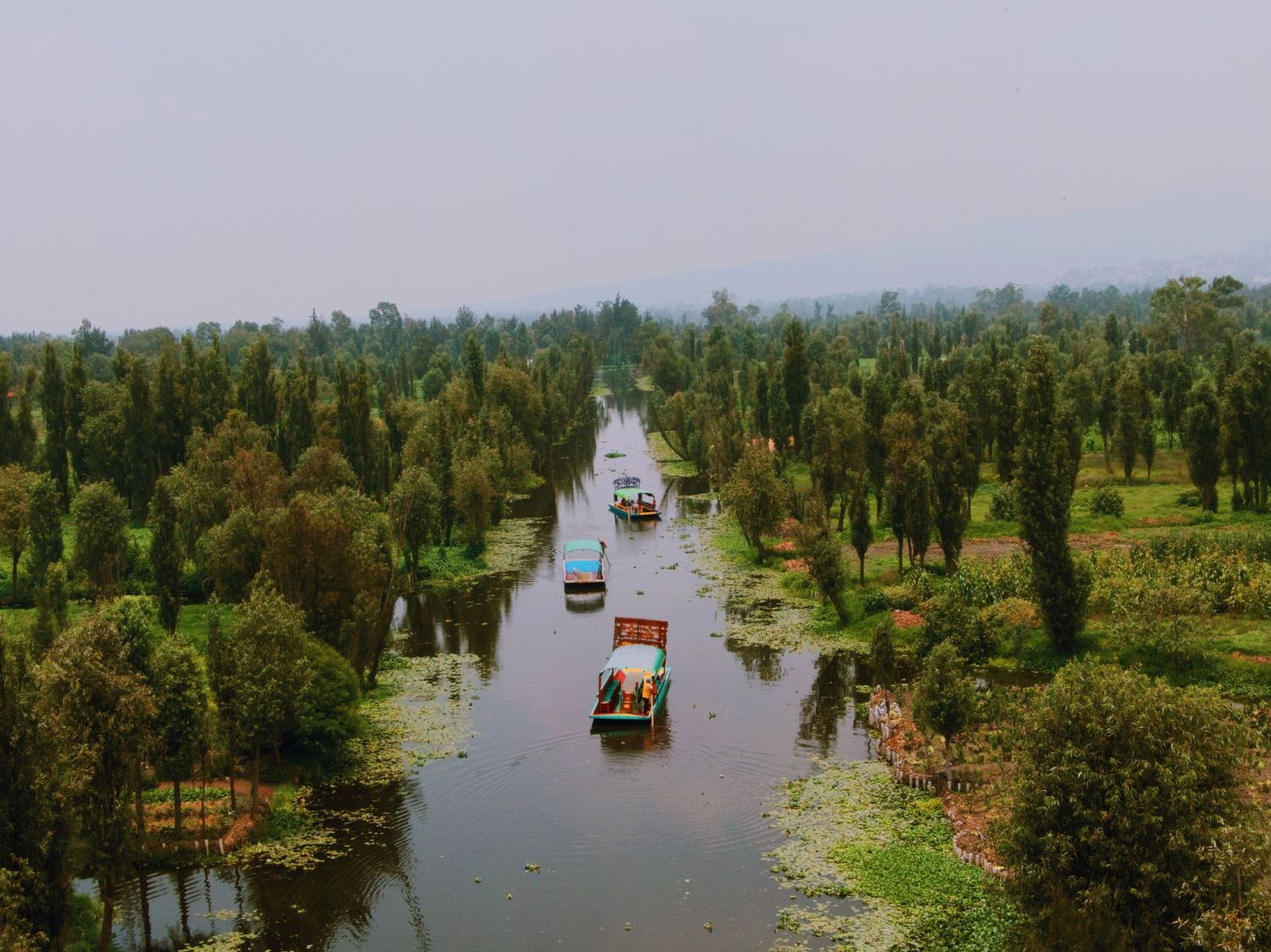
source: www.arcatierra.com/
This isn’t just a pretty view for a boat ride. Xochimilco is, all at once, an ecological laboratory, a working agricultural hub, a sacred ritual space, an architectural treasure, and a canvas for artistic expression. It’s home to the chinampas, an ancient agricultural marvel that transformed shallow lake areas into some of the most productive farmland on Earth. These artificial islands don’t just grow food; they sustain extraordinary biodiversity and continue to generate real economic and social value for the communities who tend them, much as they have for centuries.
Here, centuries of history remain quite literally alive, still shaping how Mexico City eats, celebrates, and grows.
Today we’ll dig into how the chinampas came to be, the crops and culinary traditions they still sustain, how to experience them firsthand, and why keeping this ancient system alive matters more than ever.
Xochimilco: The Living Heart of the Chinampas
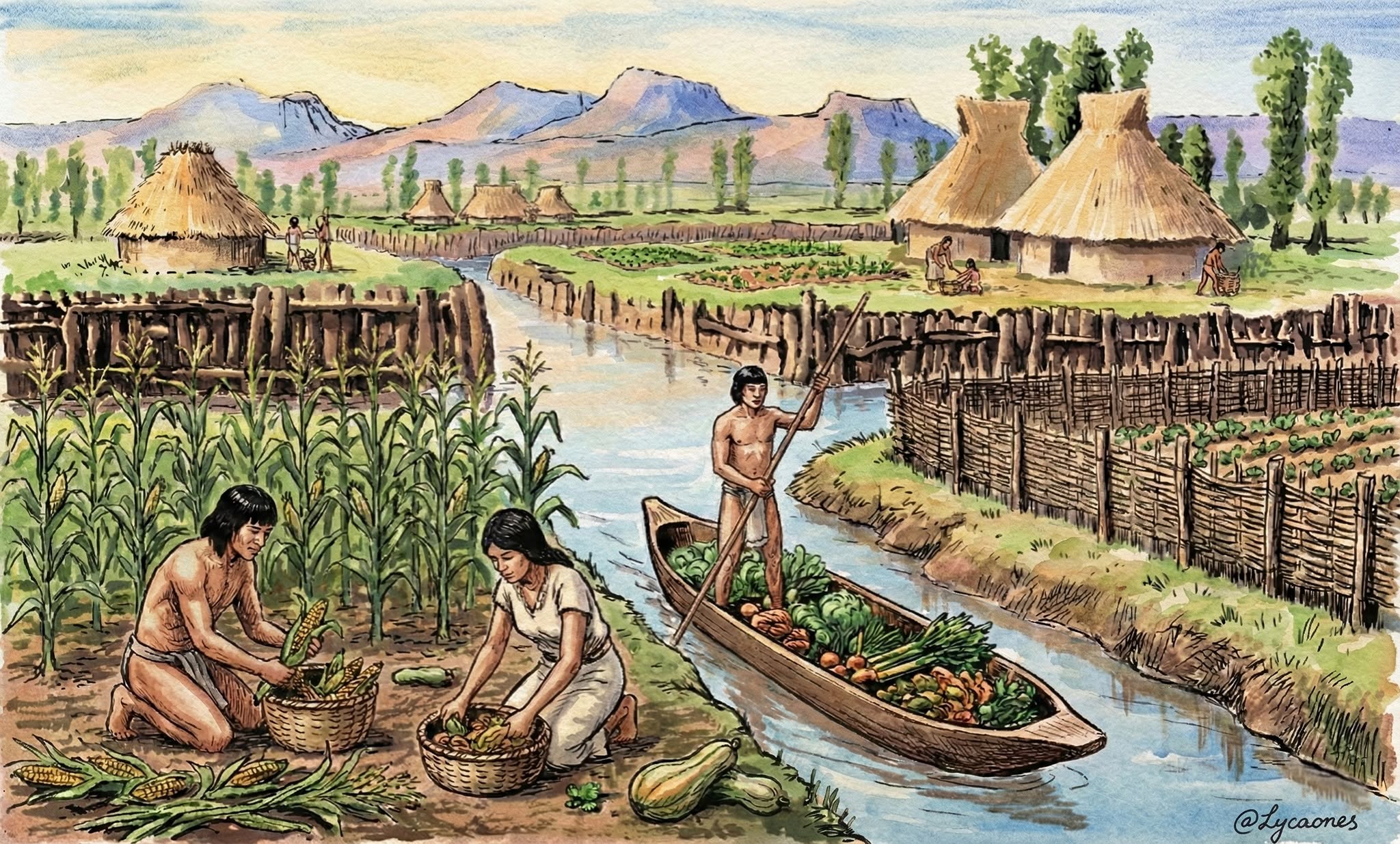
source: instagram.com/lycaones
Long before Mexico City sprawled across the valley, Xochimilco was a shimmering network of lakes and it still is, in spirit. Today it stands as a UNESCO World Heritage Site (designated in 1987), a recognized Globally Important Agricultural Heritage System under the FAO, and the last wild refuge of the beloved axolotl. More than a postcard-worthy destination, Xochimilco is living proof of Indigenous engineering genius and a centuries-old bond between people and nature.
Located in the southeastern reaches of modern-day Mexico City, the area was once settled by the Chichimeca and Xochimilca peoples. The Xochimilca trace their roots to the legendary homeland of Aztlán. When they arrived in the Valley of Mexico, they settled along the shores of Lake Xochimilco and gradually expanded into what’s now Milpa Alta, Tláhuac, Culhuacán, and Míxquic.
With settlement came remarkable feats of hydraulic engineering, like dikes, raised causeways, canals, and dams that tamed the valley’s lake system. Among these innovations was The Chinampa, a floating garden cultivation technique so effective it has endured, largely unchanged, for centuries.
What is a Chinampa?
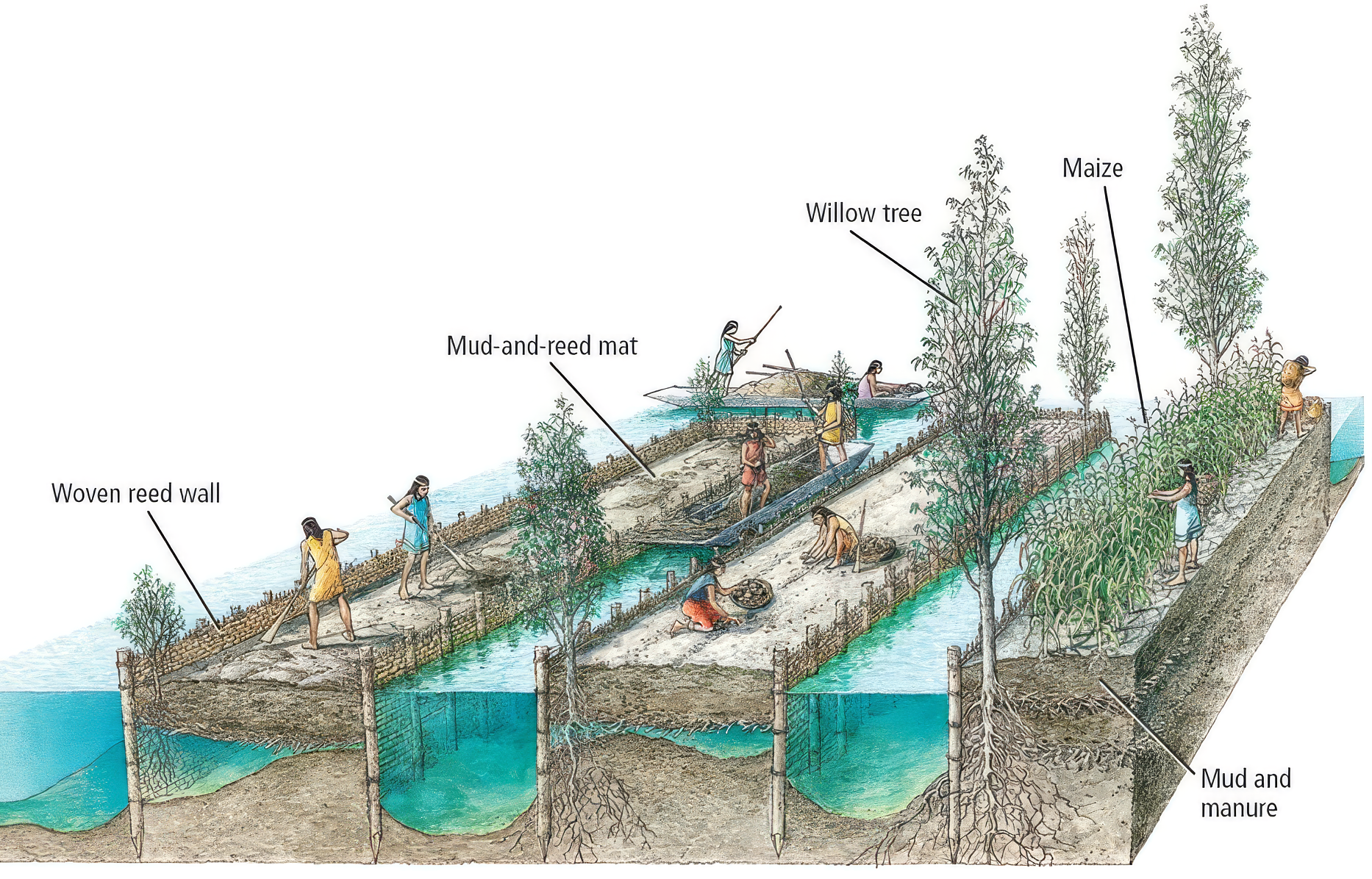
source: thearchaeologist.org/blog
Chinampas are artificial islands of Mesoamerican origin, built directly into the shallow lakes of the Valley of Mexico for intensive agriculture. The word comes from the Nahuatl “chinamitl”, meaning “fenced with reeds.” This ingenious system let civilizations like the Xochimilca and Mexica feed massive populations right on top of the water, yielding up to four harvests a year thanks to constant moisture and the rich natural fertilizer dredged from the canal floors.
Facing a shortage of arable land, the people of the Anáhuac engineered a brilliant workaround, expanding their farmland onto the lake itself. Builders staked wooden posts into the lakebed to mark out a rectangular plot, then layered it with aquatic vegetation, lake-bottom mud, and soil until it rose above the waterline. The edges were anchored by planting willow and ahuejote trees, a native willow whose roots held the structure firmly in place. The result was a raised, self-irrigating plot constantly hydrated by the surrounding water and endlessly replenished by nutrient-rich lake silt.
Individual chinampas typically ran 2 to 4 meters wide and stretched several hundred meters long, arranged in grids with narrow canals running between them so canoes could glide through to transport produce to market. The combination of steady moisture, water-moderated temperatures, and fertile lake soil made chinampas remarkably productive, capable of growing a wide variety of vegetables, flowers, and medicinal plants nearly year-round.
Key Crops of the Chinampas
At the heart of Tenochtitlan civilizations agriculture was the milpa, the traditional Mesoamerican planting system built around corn, beans, and squash grown together. Known as the “Three Sisters,” this trio formed a perfect ecological partnership, corn stalks gave beans something to climb, beans fixed nitrogen back into the soil, and squash’s broad leaves shaded the ground, locking in moisture and choking out weeds. Together, they delivered a balanced diet of protein, carbohydrates, and vitamins. Beyond the milpa, farmers also grew cacao, chile peppers, tomatoes, avocados, vanilla, nopal cactus, maguey, cotton, amaranth, and a wide range of quelites (wild edible greens).
Corn wasn’t just food; it was sacred. Mesoamerican creation myths held that humans themselves were shaped from corn dough, and the crop was eaten primarily as tortillas, tamales, and atole (a warm corn beverage). Chiles served as the all-purpose seasoning, with dozens of cultivated varieties. Cacao was valuable enough to function as a form of currency; an avocado cost three cacao beans, a tomato just one, and it was drunk as a bitter, unsweetened beverage called xocolatl, spiced and mixed with water.
Vanilla was another high-value spice. Maguey, meanwhile, was the ultimate multipurpose plant; it yielded pulque, a fermented drink made from the agave nectar, fiber for clothing and rope, needles from its spines, and building material from its leaves. Amaranth, a nutrient-dense grain, even carried ritual significance; it was molded into images of deities that worshippers would ceremonially eat.
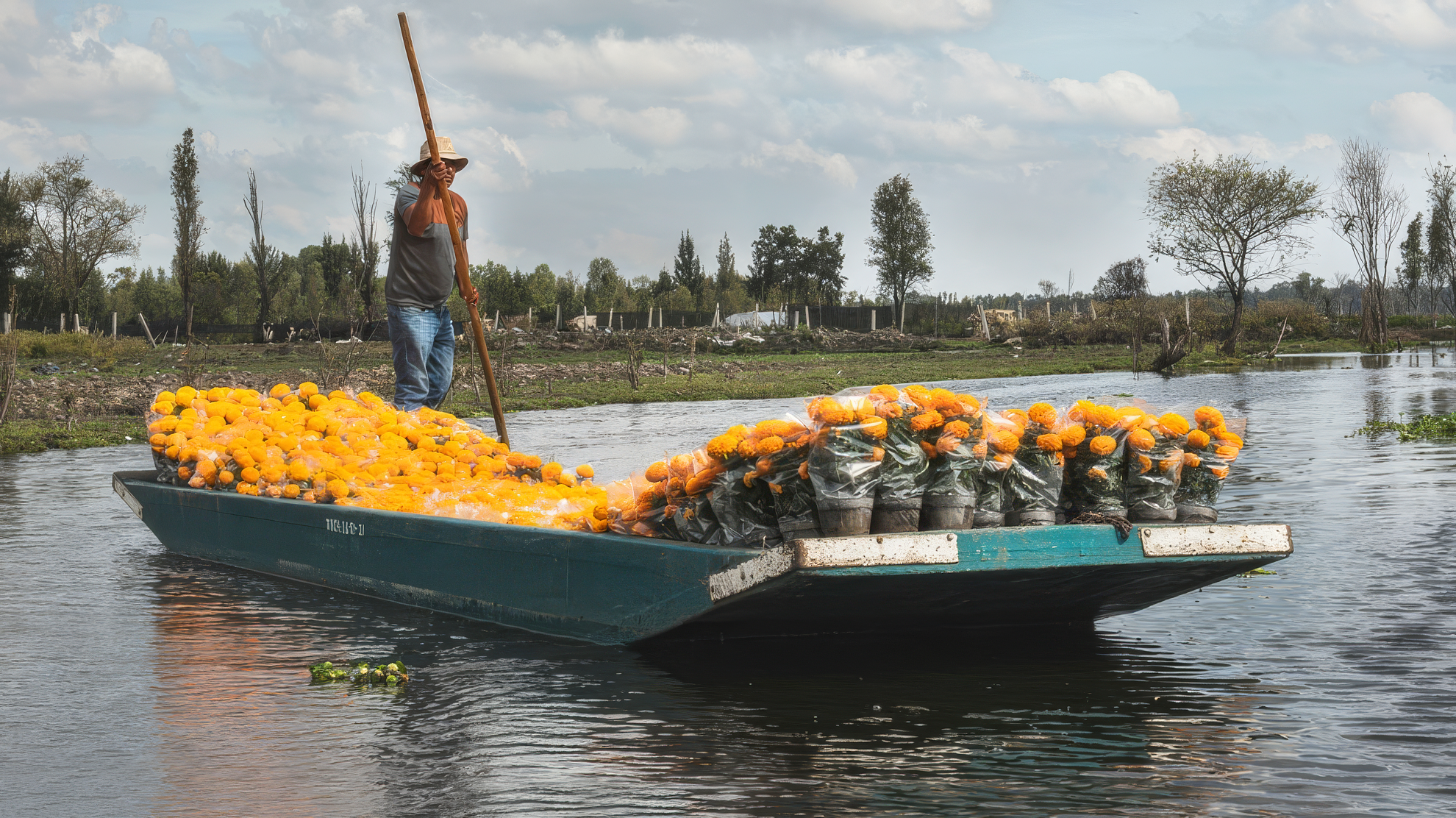
Flower cultivation flourished too, with cempasúchil (marigolds) and dahlias grown throughout the region. After the arrival of European plants, the floral landscape expanded to include species such as carnations, gladiolus, and calla lilies, while modern chinampa agriculture has also developed a major seasonal market for poinsettias.
Over time, Mesoamerican crops were joined by European imports like cabbage, spinach, lettuce, onions, radishes, beets, cauliflower, and turnips. Ornamental flowers also evolved from simple field planting into nursery-grown crops requiring greater investment and care. After the arrival of the Spanish, farmers also incorporated livestock such as cows, pigs, sheep, goats, and poultry into the agricultural system, providing additional food, materials, and manure for fertilizer.
source: www.gaceta.unam.mx/
From Tenochtitlan to Modern Mexico City: The Evolution of the Chinampas
Ancient Tenochtitlan sat surrounded by a patchwork of interconnected lakes, some freshwater and some saline, carefully managed by an elaborate system of dikes and canals. Fields of corn, vegetables, and flowers stretched across the horizon, and as population pressure grew along the shores of Lake Xochimilco, chinampa construction accelerated as a way to literally reclaim land from the water. Communities in the southern lake valley transformed marshes, swamps, and lagoons into thriving farmland, a system that eventually transformed vast areas of the southern lake valley into productive farmland.
Chinampas weren’t just for farming; some were built to hold small temples and homes, themselves ringed by plots of corn and other crops. Over time, the lakes evolved into a sprawling network of canals weaving between the chinampas, feeding traffic toward key destinations including, most importantly, the great marketplace of Tenochtitlan, which the fertile south kept well-stocked.
The chinampa system has continuously adapted across centuries of change. During the colonial era, Spanish authorities kept the system running to supply fresh food to Mexico City. After Mexican independence in the 19th century, small local farmers continued to maintain and cultivate the chinampas, keeping the ancestral tradition alive. Under the Porfiriato, major hydraulic projects began diverting water from Xochimilco to supply the capital, contributing over time to the decline of the canals and waterways that sustained the agricultural trade. From the 20th century onward, the chinampas have faced mounting pressure from urbanization, water pollution, and shifting consumption patterns.
From the Chinampa to Your Trajinera… or Table
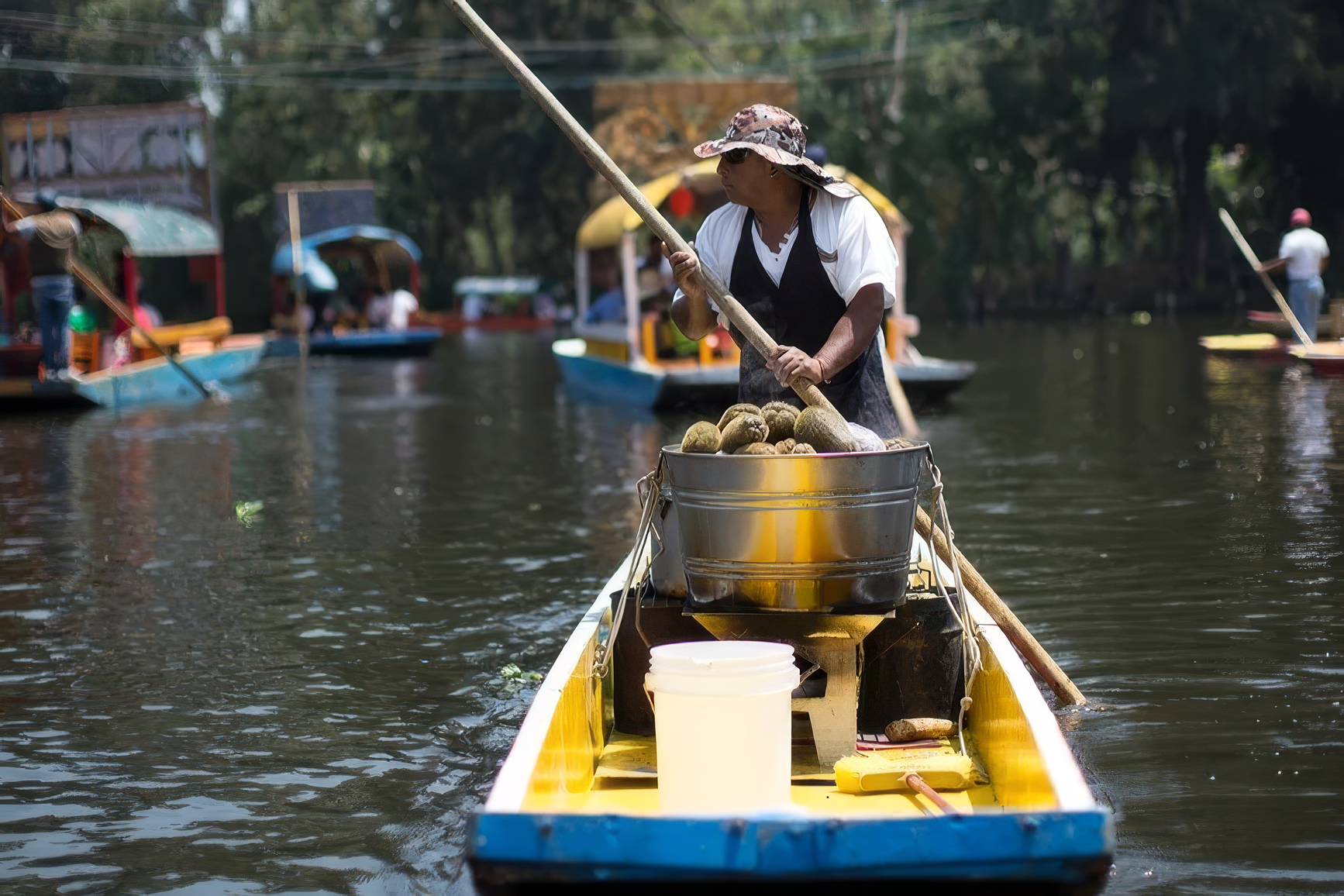
Xochimilco carries a deep culinary history, and preserving it matters, not just as tradition, but as a sustainable food system rooted in ancestral identity. As Mexico City’s appetite for local and traditional cooking grows, Xochimilco’s chinampa-grown produce is having a moment: crops are harvested using centuries-old techniques that maximize flavor and protect the environment, arriving at the table just hours after being cut. Local markets now showcase this fresh produce, and Xochimilco’s food scene has become a genuine tourist draw for both international and local visitors eager to try dishes that might otherwise fade into obscurity.
source: grupoanimal.mx
A Once-in-a-Lifetime Trajinera Ride
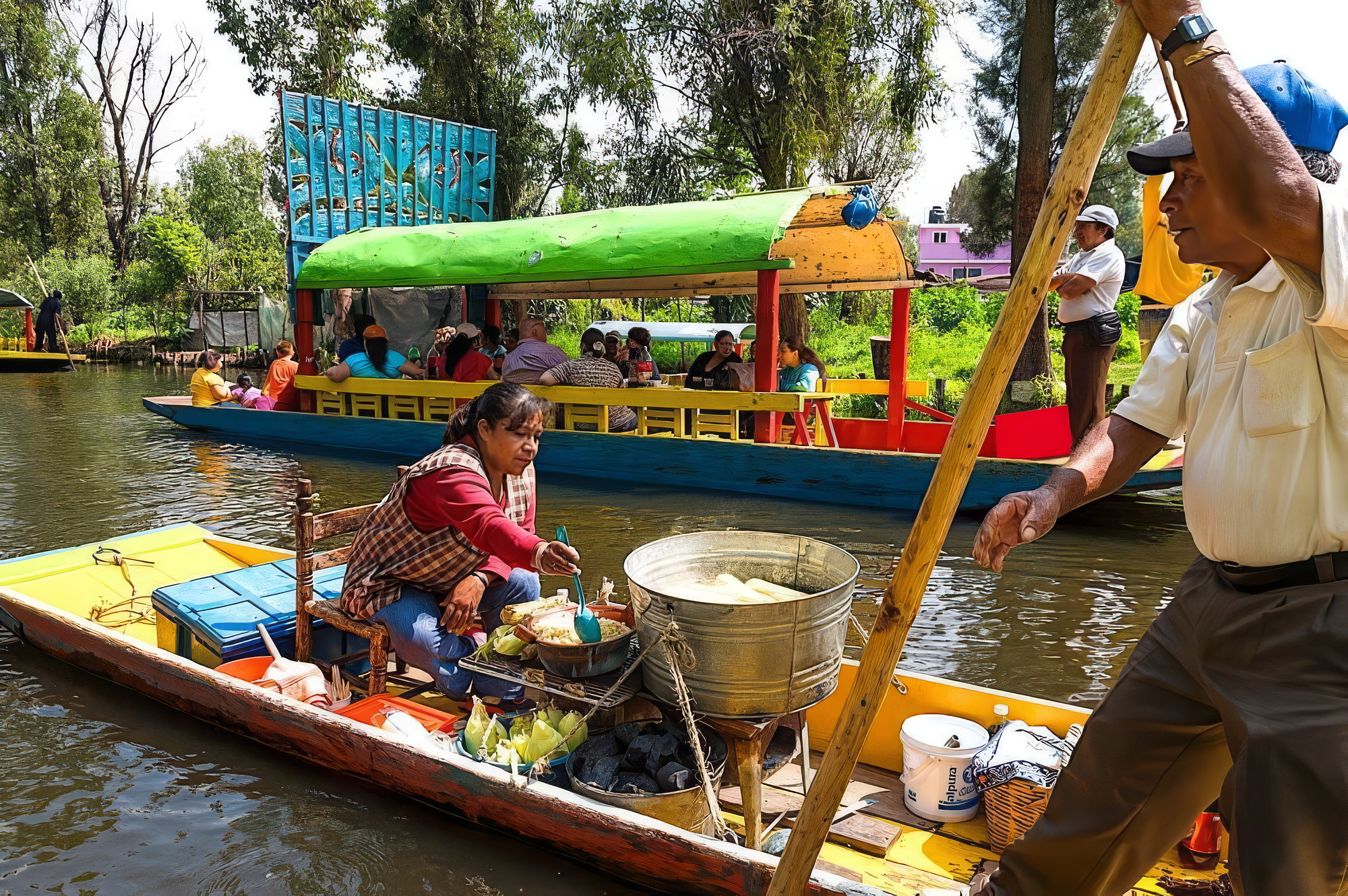
The star attraction at Xochimilco is a trajinera ride, a traditional flat-bottomed boat, decorated with handmade flower decorations, navigated by local rowers or trajineros using a long wooden pole called a pértiga, a punting pole, which is pushed against the bottom of the canal. Trajineras ride through the canals threading between the chinampas, where floating vendors sell food and drinks straight from passing boats. It’s an easy, accessible activity, but a few things help before you go.
One of the busiest docks, Nuevo Nativitas, rents colorful, flower-decked Trajineras for around 750 pesos per hour (holding up to 18 people), with live mariachi or norteño bands available to hire. Always confirm the total hourly price before boarding, and for a quieter experience, I suggest skipping weekends.
What to Eat?
Once you’re cruising the canals, hunger tends to strike fast, and Xochimilco delivers with blue corn quesadillas filled with mushrooms or squash blossoms, bean-filled blue corn tlacoyos, sopes topped with delicious salsas, and enchiladas with countless mole variations. Grilled corn on the cob or esquites, prepared with mayo, queso fresco, and chili powder. While the restaurants and food stalls around the Xochimilco Market offer plenty of tasty traditional antojitos, the real old-Mexico experience comes from the small boats selling food prepared on the spot with ingredients sourced from the surrounding chinampas.
Beyond the usual tacos al pastor, you can find dishes once favored by the citizens of Tenochtitlan itself, like Fresh Fish Mextlapique, a freshwater fish tamale, grilled and wrapped in dried corn husks, Mixmole, a fish stewed in green salsa, Chileatole, a savory corn and chile atole, and Necuatole, a sweet squash-based treat traditionally offered to children during Día de Muertos celebrations.
source; facebook.com/magiaymaravillasdemexico
What to Drink?
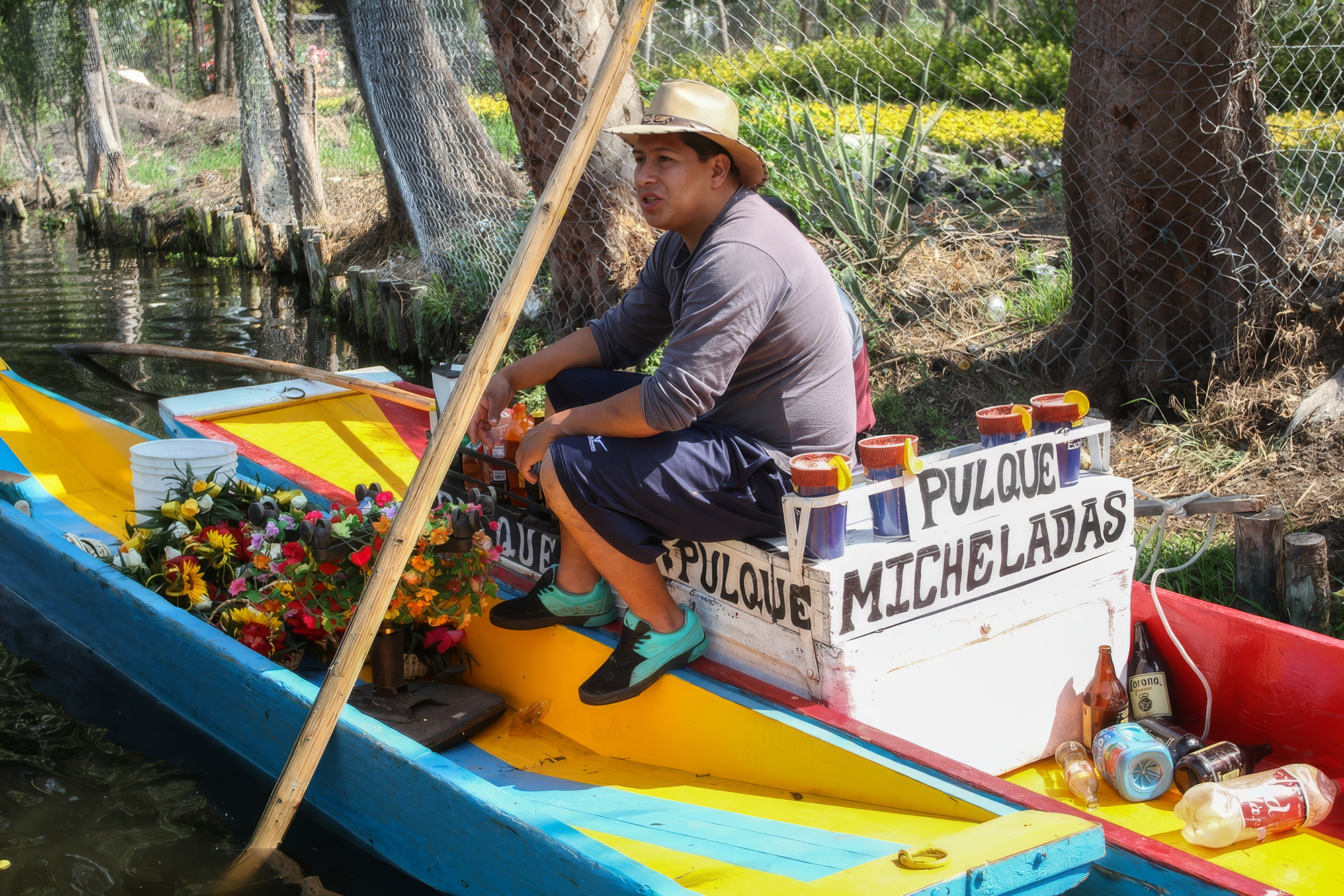
Staying hydrated matters on a canal-hopping food crawl. Start with Aguas Frescas in traditional local flavors like jamaica or tamarindo, or Horchata.
Feeling festive? Try Pulque! One of Mexico’s oldest fermented beverages, nicknamed “the drink of the gods.” Look for pulquerías that preserve their original decor, and try classic flavors like celery, oatmeal, guava, or tomato, plus show-stopping curados made with marigold (cempasúchil) or prickly pear (tuna).
If fermented, funky flavors aren’t your thing, a cold beer with a michelado mix is always a solid backup.
As evening falls, pair sweet fresh made pan dulce with a spiced café de olla (brewed with anise, piloncillo, and cinnamon) or Artisanal sorbets with flavors ranging from classic to exotic, like avocado, nopal, or lime.
source: cuartoscuro.com
Chinampas Sustainability and Cultural Continuity
The environmental value of the chinampas is hard to overstate: this small wetland system holds 2% of the world’s biodiversity and 11% of Mexico’s national biodiversity, making it a standout model of sustainable agriculture, one with remarkable resilience in the face of climate change and urban sprawl.
Thanks to their unique characteristics and still-mysterious origins, Xochimilco’s chinampas have become a major subject of scientific study, with researchers working to understand how their various elements interact to create such an efficient, sustainable production system. For the past two decades, UNAM’s Institute of Biology has partnered directly with chinamperos/farmers on a “Chinampa Refuge” model, a conservation strategy aimed at both protecting the wetland and reviving its local economy.
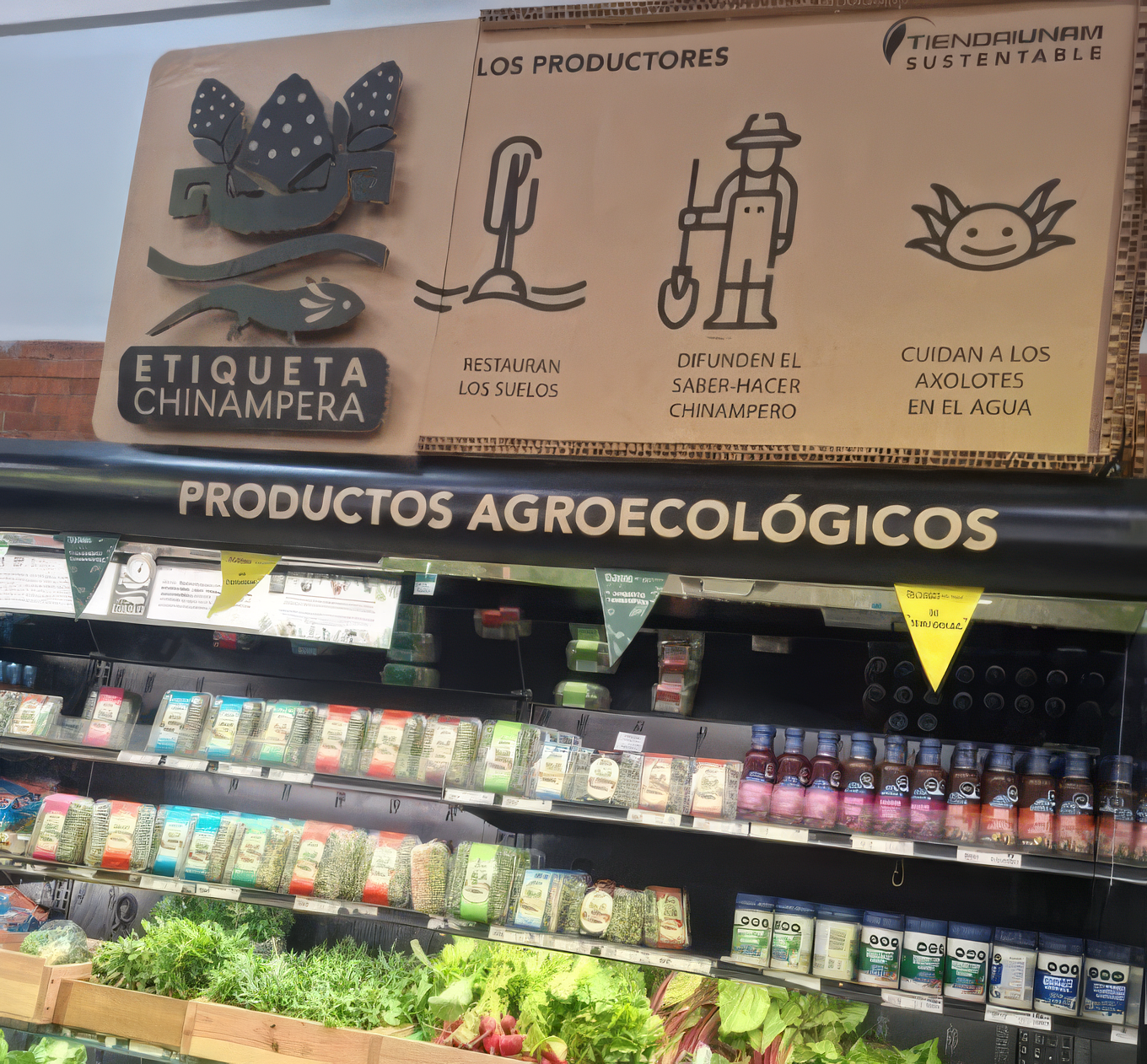
Restoring chinampas at scale would carry major ecological benefits. The chinampa system is an integral part of the wetland ecosystem, supporting biodiversity and traditional agriculture, while the Chinampa Refuge model uses biofilters to improve canal water quality and create safer habitat for native species. On the economic side, a new quality seal called the Etiqueta Chinampera (“Chinampa Label”) has been created to recognize good agricultural practices, safeguard traditional farming knowledge, and help distinguish chinampa-grown products in the marketplace, supporting a more sustainable local economy.
source: grupoanimal.mx
A Living Legacy Worth Protecting
Xochimilco’s chinampas are more than a scenic stop on a Mexico City itinerary; they’re a working system that has quietly fed generations for over a thousand years, adapting through empires, colonization, and the relentless growth of one of the world’s largest cities. From the milpa’s Three Sisters to pulque poured in century-old pulquerías, the chinampas connect ancient wisdom to modern necessity in a way few places on Earth still manage.
That connection is fragile. Urbanization, water pollution, and shifting consumption patterns have already shrunk what was once a vast, thriving wetland. Its survival now depends on the chinamperos who keep farming the old way, the researchers working to restore it, and the visitors and diners who treat it as more than a backdrop for a party boat.
So the next time you glide down a Xochimilco canal, plate of fresh enchiladas in hand, remember you’re tasting a tradition that has fed Mexico City since before it was Mexico City at all!
Hungry for more? Let us know.
- Abbey