
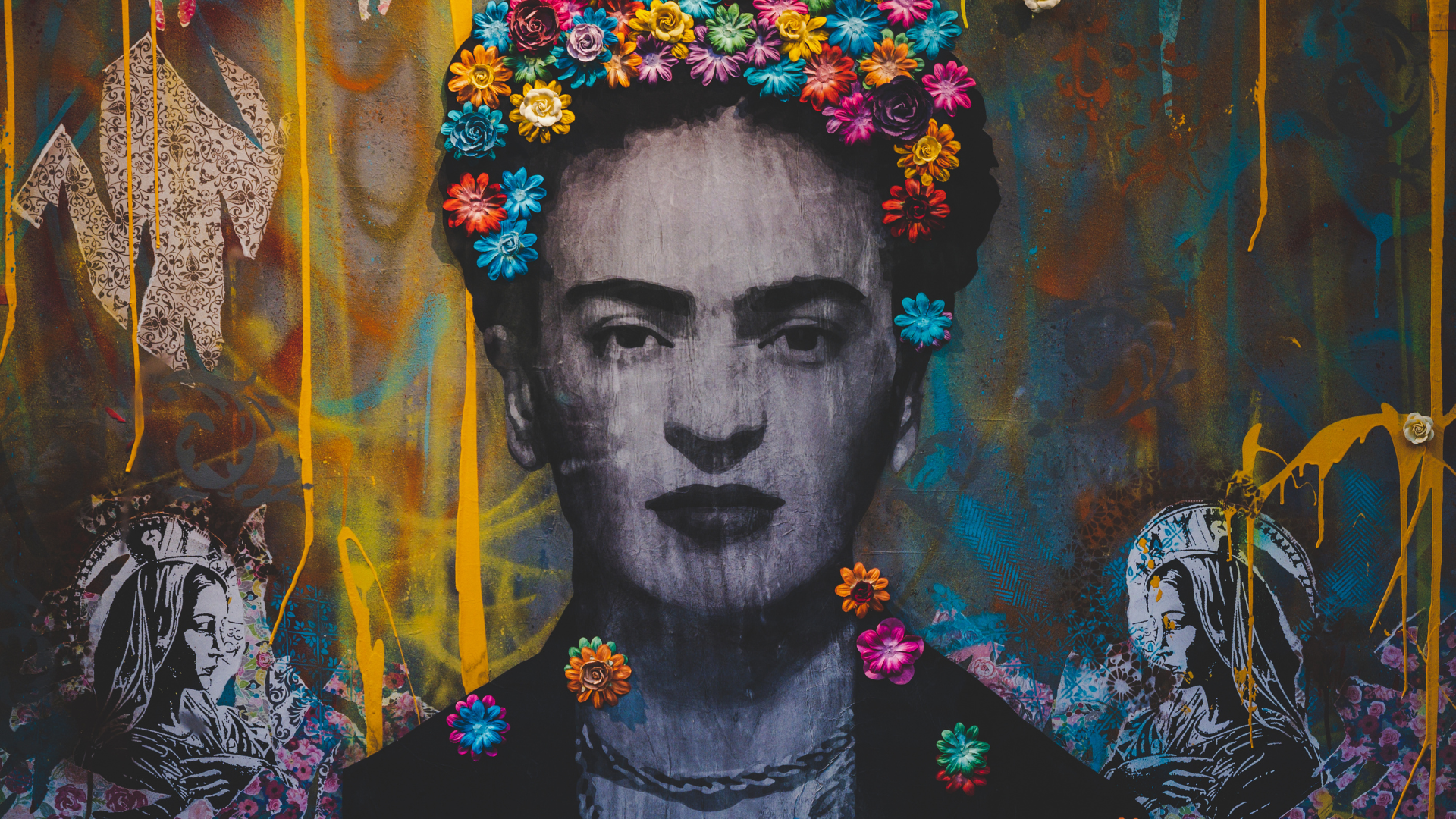
Mexico City is one of those rare destinations you can explore with your eyes and your appetite, and no creative duo captures that spirit better than Frida Kahlo and Diego Rivera. Together, this iconic couple didn’t just paint Mexico; they taught the world how to look at it.
If you’re planning a trip to Mexico City and want to combine art, history, and food into one unforgettable route, this guide is for you. We’re covering the four essential stops where you can experience Kahlo and Rivera’s work today. In order to really understand Frida and Diego, you also need to understand Mole, mezcal, handmade tortillas, and a long, lingering sobremesa.
Museo de Arte Moderno (MAM)
If you only have time for one Frida Kahlo painting on this trip, make it “The Two Fridas” (1939), which lives right here, in the Bosque de Chapultepec.
Painted during her divorce from Diego, this double self-portrait brings together the Tehuana Frida, beloved by Rivera, holding a miniature portrait of him, and the European Frida in a Victorian dress, with a severed vein bleeding onto the white fabric. The Museo de Arte Moderno (MAM) has held it in its permanent collection since 1966, and it’s the most loan-requested piece of Mexican art in the world. Alongside it, MAM’s permanent collection brings together works by Diego Rivera, Remedios Varo, Leonora Carrington, Rufino Tamayo, Siqueiros, and Orozco, essentially a who’s-who of twentieth-century Mexican art, spread across two floors and a sculpture garden.
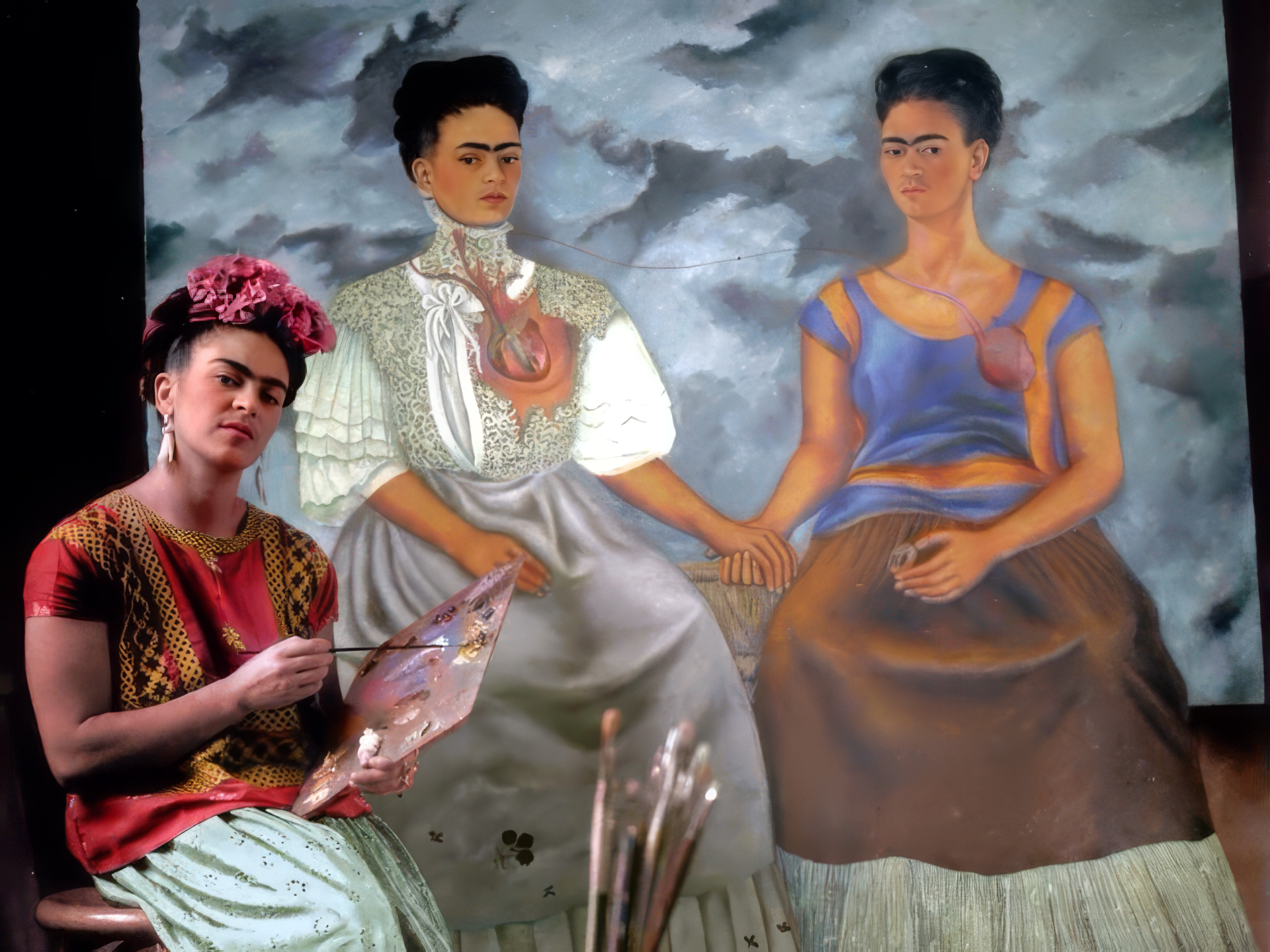
“The Two Fridas” & Frida Kahlo / Centro Urbano
Know Before You Go:
– Where: Paseo de la Reforma s/n, Bosque de Chapultepec (1st section), Miguel Hidalgo borough.
– Admission: Around $95 MXN; free on Sundays. Free for students, teachers, INAPAM cardholders (seniors), and children under 12.
– Tip: Pair your visit with the sculpture garden, and pace yourself — MAM is best enjoyed slowly.
Where to Eat Near Bosque de Chapultepec?
Bosque de Chapultepec is one of the few places in Mexico City where you can go straight from world-class art to a great meal without leaving the 2,140-acre park.
– Lago Algo: Contemporary fine Mexican cuisine with lake views and an art gallery in the same building: the perfect, conceptually fitting way to end a museum day. It’s upscale and in high demand, so make a reservation and note that it is closed Tuesdays and Wednesdays.
– Del Bosque: A classic family-friendly spot by the water, serving textbook Mexican breakfasts like spicy chilaquiles, huevos rancheros, and the unmissable café de olla, at reasonable prices, with ducks paddling in the background. Ideal if you’ve got time and a real appetite.
– Mexico is full of street food, and Chapultepec is no exception. Along the park’s main walkways, the ones leading to the zoo and circling the smaller lakes, you’ll find plenty of stands selling antojitos and snacks: chapulines, chicharrones, flavored sodas, traditional nieves or sorbets, and more. In some spots, you’ll also find street stalls with small loncherías and juice stands, perfect for grabbing a torta, milkshakes, or a refreshing aguas frescas.
Museo Dolores Olmedo
The Largest Frida Kahlo & Diego Rivera Collection, now Reopened in Xochimilco, if you’re a true devotee of Diego and Frida, this is the pilgrimage site, and there’s exciting news that makes it a must-visit in 2026.
Housed in the former La Noria hacienda in Xochimilco, the Museo Dolores Olmedo reopened its doors on May 30, 2026, after six years closed. Its closure and the ultimately scrapped plan to relocate the collection to Parque Aztlán in Chapultepec sparked one of the biggest cultural debates in recent Mexican history. Public pushback won out, and the collection stayed exactly where its founder wanted it.
What makes it so special? Dolores Olmedo, businesswoman, philanthropist, and close friend of Rivera’s for more than three decades, assembled the largest private collection in the world of the two artists: over 140 works by Diego Rivera and around 25 by Frida Kahlo, many acquired directly from the muralist himself. Add pre-Hispanic, colonial-era, and folk art, sprawling gardens, peacocks, and the museum’s famous resident Xoloitzcuintle dogs, and you get a museum that feels genuinely alive.
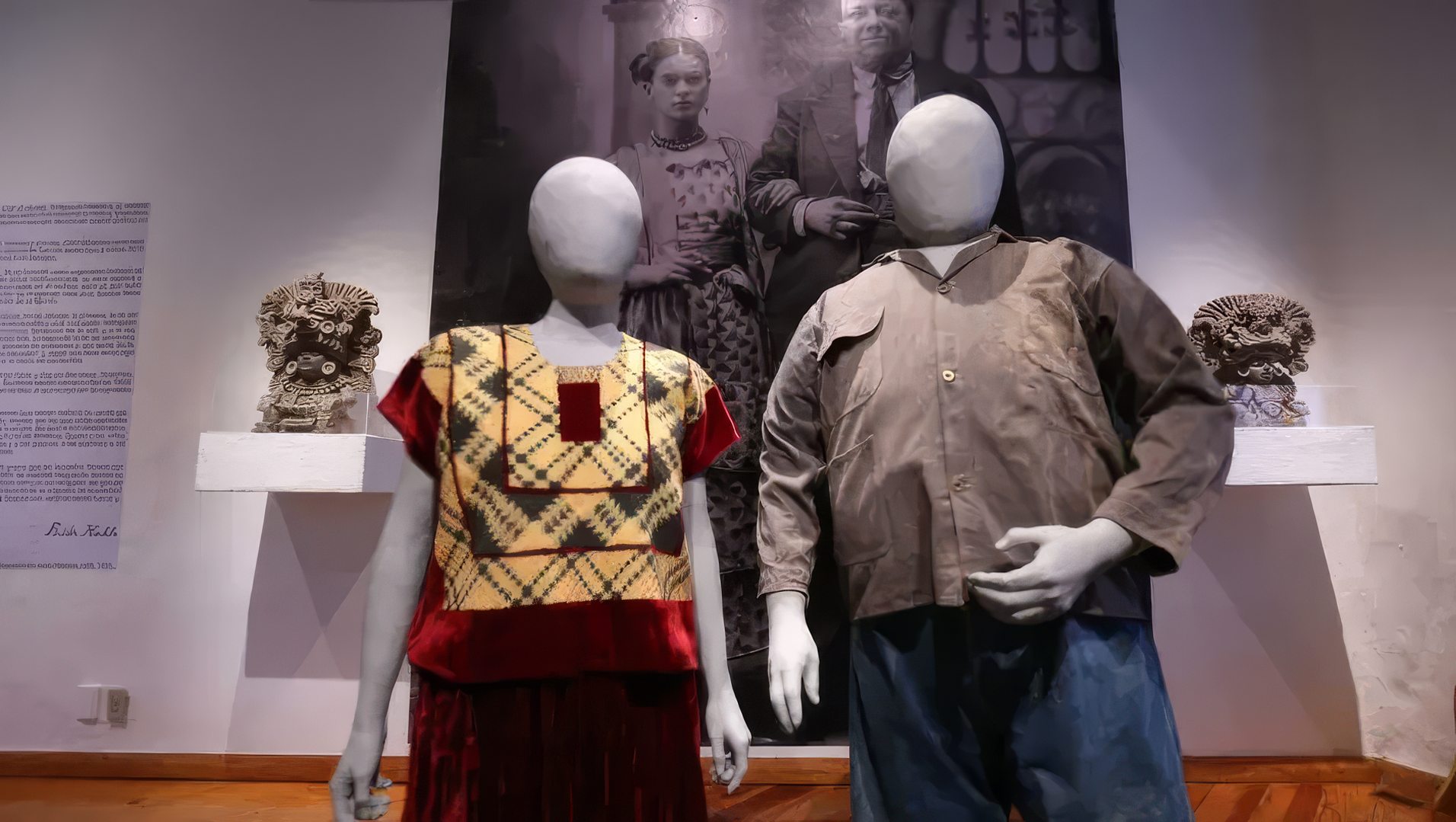
Frida Khalo y Diego Rivera at Museo Dolores Olmedo/Milenio
Know Before You Go:
– Where: La Noria, Xochimilco, historic site of the La Noria hacienda.
– Hours: Tuesday–Sunday, 10:00 a.m.–6:00 p.m.
– Admission: $162 MXN for Mexican nationals; $70 for Xochimilco residents, children under 12, seniors, students, and teachers; $432 for international visitors.
– Tip: buy tickets online at museodoloresolmedo.org.mx, same-day tickets at the door are limited.
Where to Eat in Xochimilco After the Museum?
This area of Xochimilco is all about authenticity, the best local flavor, exactly what you’ll want after a few hours in the galleries. Choose from many street stalls preparing blue corn fresh made tlacoyos, quesadillas, sopes, huaraches y gorditas. Stop by a fonda and try traditional dishes like mole, pork belly soup, pancita, or pozole in very generous portions.
– The full Xochimilco experience: cap off the day with a ride on a colorful trajinera at the birthplace of the famous Axoltol, complete with esquites-street corn cups, micheladas, and floating mariachi bands. It’s not a restaurant, but it might be the most Mexican “table” you’ll ever sit at.
Frida Kahlo Museum – Casa Azul
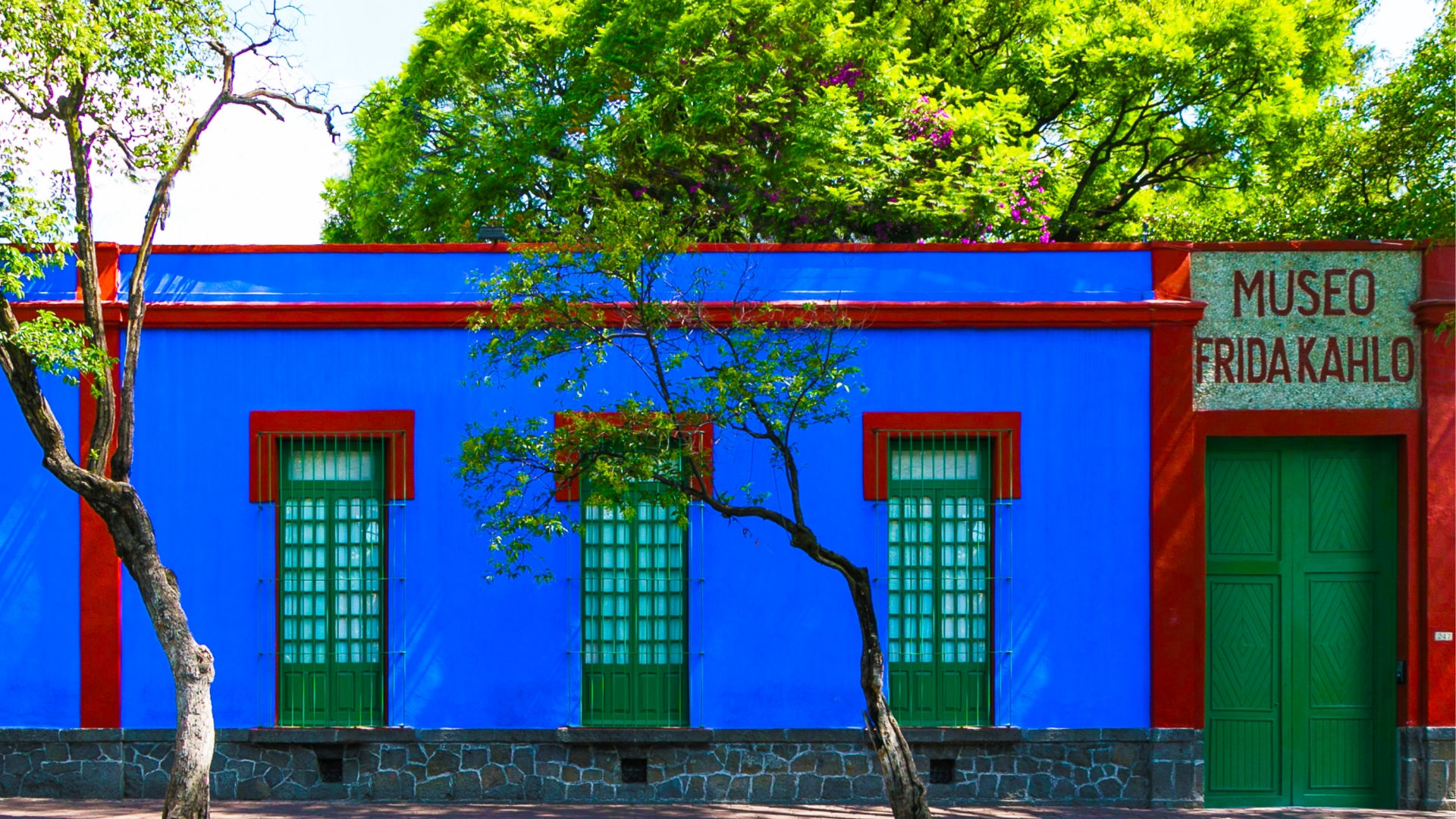
Step inside Frida Kahlo’s House in Coyoacán, the most visited and beloved stop on the entire route. The Casa Azul, the Museo Frida Kahlo since 1958, is the house where Frida was born, lived with Diego, and died. Its cobalt-blue walls hold her studio, her bed with a mirror mounted above the canopy, her wheelchair positioned at the easel, her Tehuana dresses, her hand-painted corsets, and works by both her and Rivera. This isn’t just a museum; it’s a window into her private world.
Know Before You Go:
– Where: Londres 247, Col. Del Carmen, Coyoacán.
– Tip 1: Buy tickets online well in advance. This is one of the most in-demand museums in Mexico City, and same-day entry is rare.
– Tip 2: Many tickets bundle in admission to the Museo Diego Rivera Anáhuacalli (the volcanic-rock pyramid Diego built for his pre-Hispanic art collection), about 15 minutes away, a fantastic two-for-one.
Where to Eat Near Casa Azul?
Coyoacán is, without exaggeration, one of the best neighborhoods to eat in all of Mexico City. The hub is the Jardín Parque Centenario, about a ten-minute walk from the Casa Azul:
In between museums book a Coyoacan Market Food Tour with Eating With Carmen so you don’t miss out on some of the best Mexican Antojitos you’ll ever have!
-The Mercado de Coyoacán, a paradise for foodies to try the traditional tostadas topped with tinga stew, pig trotters, or ceviche, crispy fried quesadillas filled with exquisite stews, pork carnitas Michoacán style, and pambazos.
-Wrap it up with pure tradition and an unmissable dessert, choose between the all-time favorite churros, traditional or filled with chocolate, freshly made buñuelos, gorditas de nata, or ice cream.
– Los Danzantes: Fine Mexican cuisine rooted in Oaxacan tradition, served in a gorgeous courtyard, with a standout mezcal bar. One of the best spots in Coyoacán for a memorable meal. Reservations recommended.
– Corazón de Maguey: A temple of mezcal and well-executed Mexican cooking like guacamole with chapulines, tlayudas, and a wide variety of moles.
Casa Kahlo Museum – La Casa Roja
Frida Kahlo’s Childhood Home in Coyoacán opened on September 27, 2025. The Museo Casa Kahlo is the most emotionally moving addition to Mexico City’s Frida Kahlo museum circuit and the first one run by her own family.
It’s housed in the so-called Casa Roja, the home Frida’s parents bought after gifting her the Casa Azul as a wedding present, and which stayed in the Kahlo family for over a hundred years. It was donated by Mara Romeo Kahlo, the artist’s great-niece. Don’t expect major oil paintings here; instead, this museum tells the story of Frida as a child, daughter, and sister. You’ll find personal belongings, photographs taken by her father Guillermo (a professional photographer), the microscope she used as a girl to study insect wings, votive paintings made by Frida herself, dolls she bought in San Francisco, and the basement that served as her hideaway whenever she fought with Diego. It’s a warm, human, and luminous side of Frida, far from the pain that usually dominates her public image.
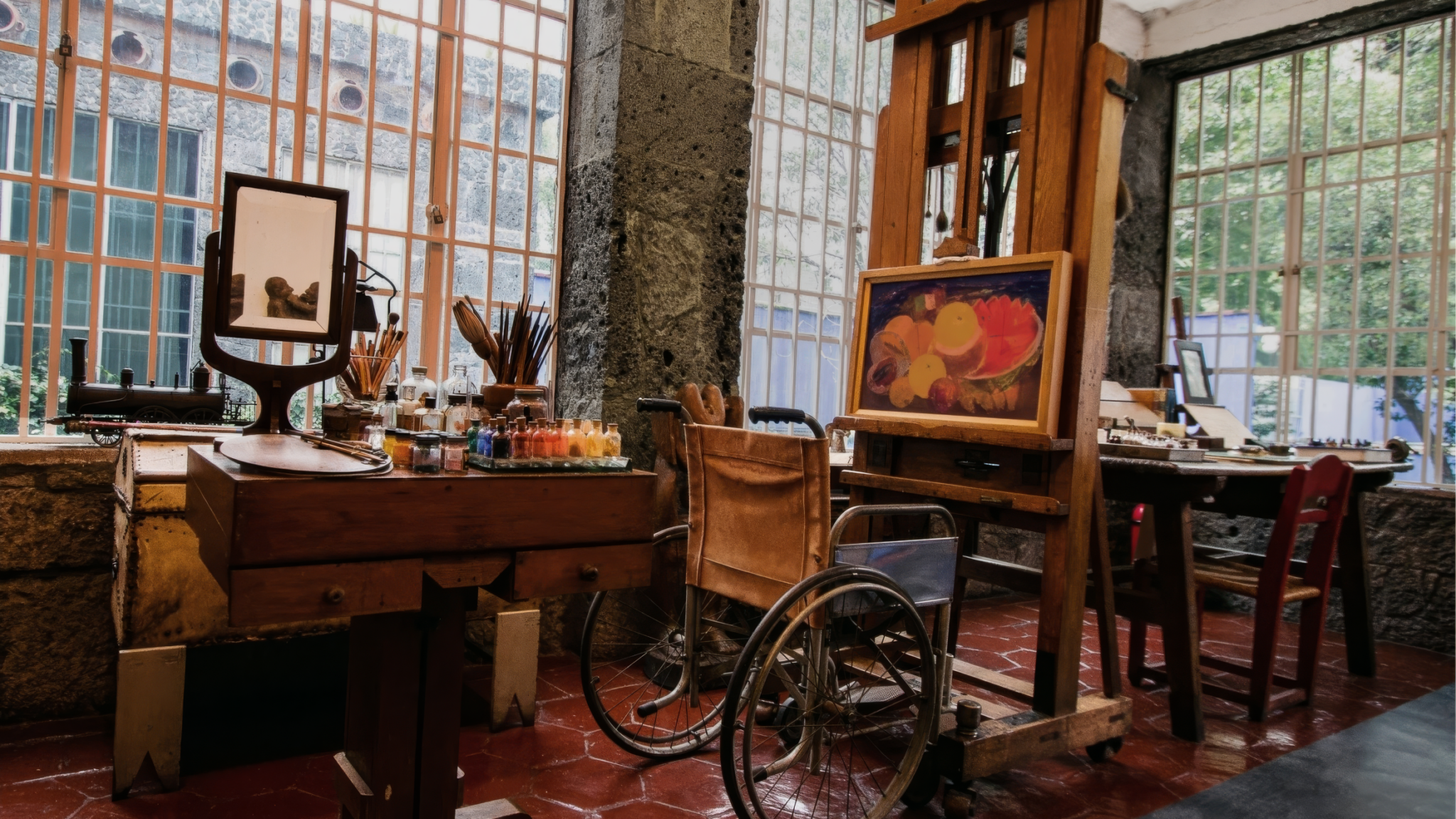
Frida Kahlo’s father’s photography studio at Casa Roja
Know Before You Go:
– Where: Aguayo 54, Barrio del Carmen, Coyoacán (a short walk from the Casa Azul).
– Hours: Wednesday–Monday, 9:00 a.m.–7:00 p.m.
– Tip: visit on the same day as the Casa Azul, they’re just a few doors apart, to see Frida in two stages: the family that shaped her, and the icon she became.
Where to Eat Near Casa Kahlo Museum?
– For breakfast, La Esquina de los Milagros, right on the Jardín Centenario, serves chilaquiles and enchiladas suizas at good prices with a park view.
– Antiguo Palacio de Coyoacán; Seafood, seasonal chiles en nogada, and enchiladas suizas in a lively, patio-filled setting. Warm service and generous portions.
– La Calaca: Set inside a colonial house decorated with a Day of the Dead theme; the atmosphere, flavor, and character are 100% Coyoacán.
Bonus Stop: Museo Diego Rivera Anáhuacalli
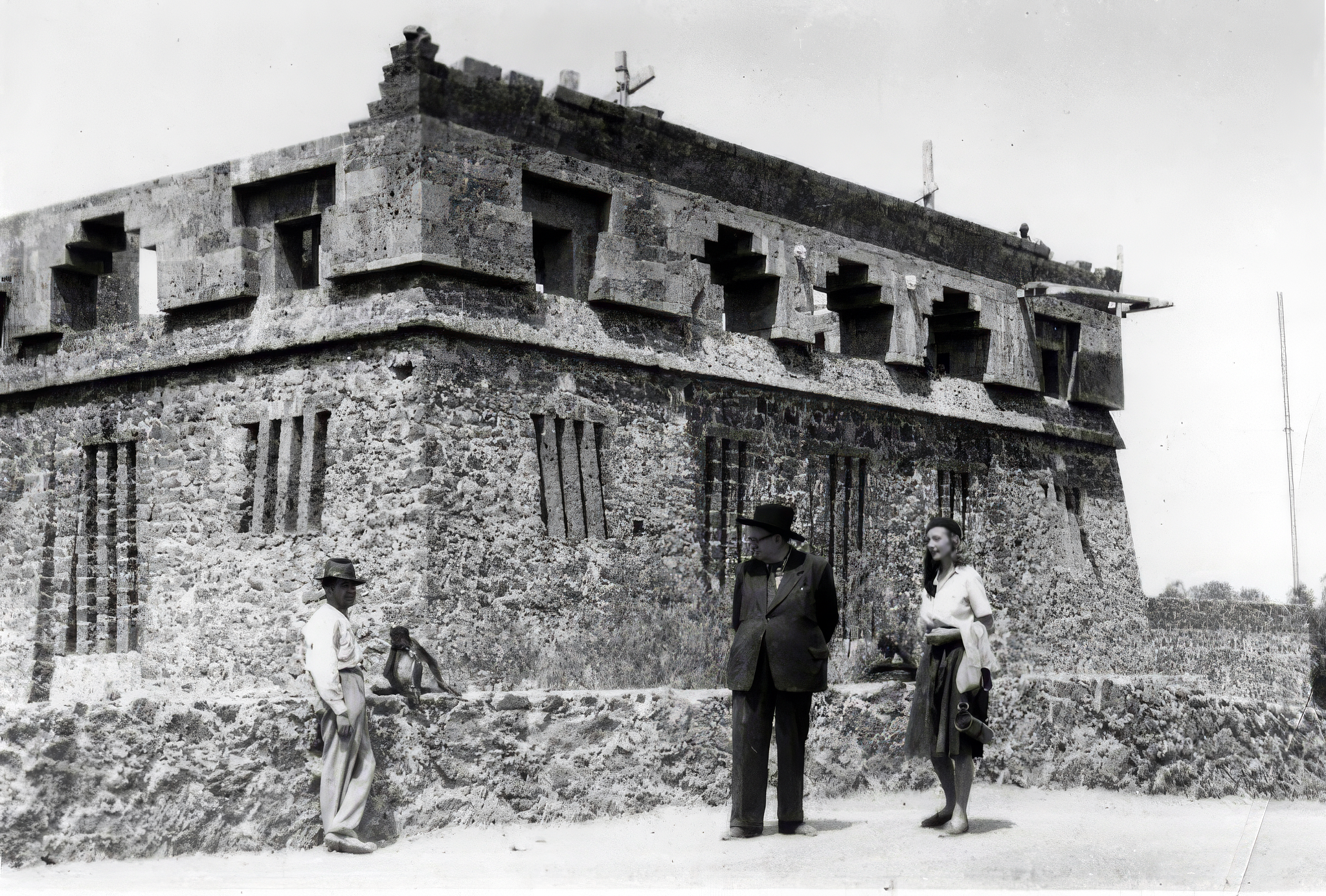
The Museo Diego Rivera Anáhuacalli is a one-of-a-kind site in Mexico City, designed by the muralist himself. Located in Coyoacán, its architecture echoes a teocalli, a “house of energy,” built from volcanic stone quarried from the Xitle volcano. It houses Rivera’s monumental collection of more than 50,000 pieces of pre-Hispanic art.
Diego Rivera, painter, muralist, and one of Mexico’s great intellectual figures, was also one of the most prolific art collectors of his era. His collection eventually grew to nearly 60,000 objects: Teotihuacan masks rescued directly from archaeological sites, ceramics from western Mexico saved from looters, Mixtec incense burners acquired through trade, and thousands of other pieces.
This house, built for Diego’s collection, is more than a museum; it’s a grand, modern monument inspired by the ancient world.
One Last Bite
Frida and Diego never separated art from life: they painted, cooked, hosted friends, argued, and made up amid calla lilies, skulls, and set tables. Touring their work while eating well isn’t a touristy indulgence; it might just be the truest way to understand them.
Enjoy the journey through time and Provecho!
- Abbey