
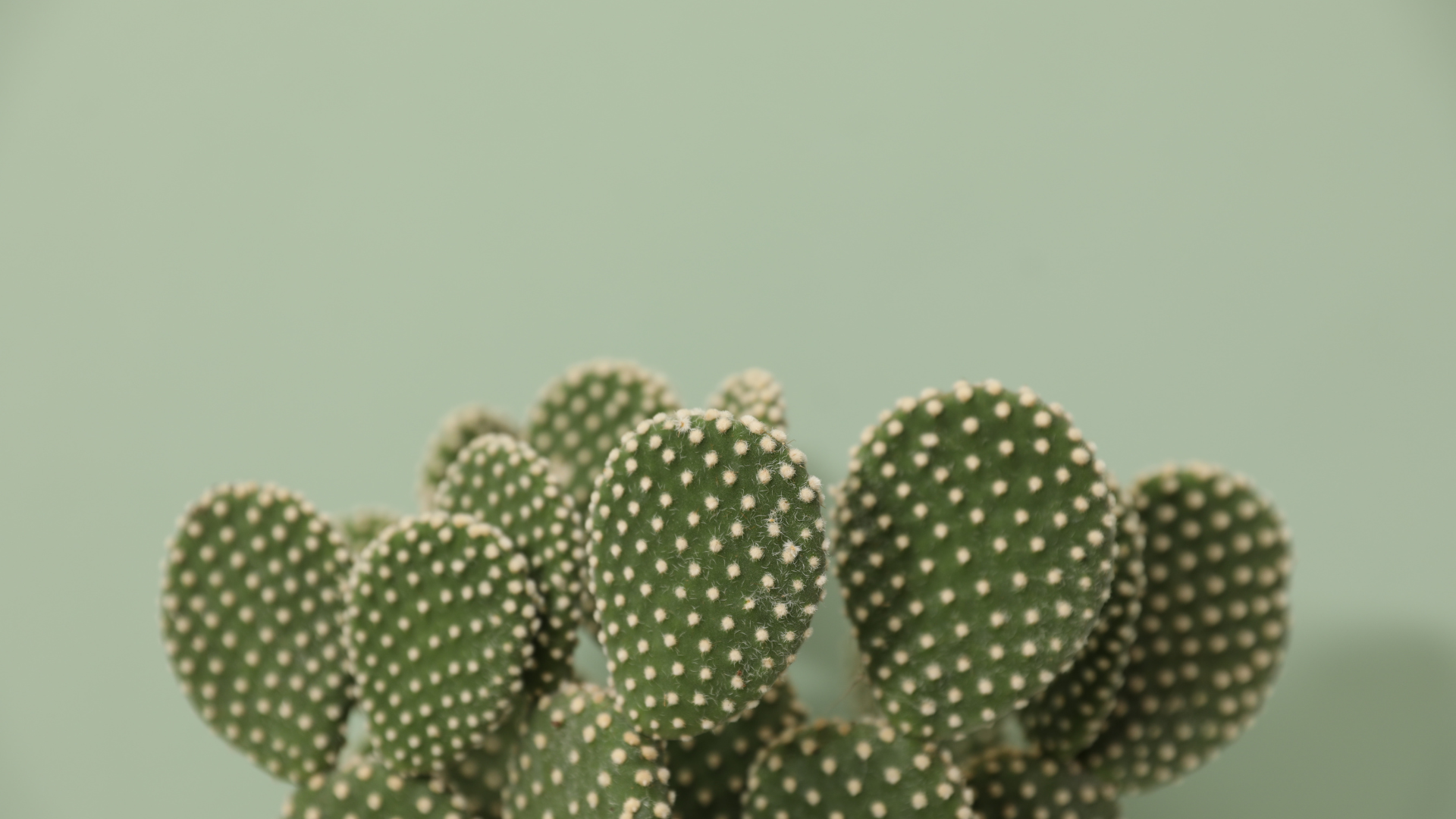
If there’s one plant that captures the soul of Mexico, it’s the nopal. Long before tacos became a global obsession, this spiky, paddle-shaped cactus was already feeding civilizations, fueling myths, and holding entire ecosystems together. Alongside the maguey and mesquite, it formed, what I like to call, a holy trinity of plants that sustained the nomadic peoples of the Mexican highlands.
A Symbol Rooted in Legend
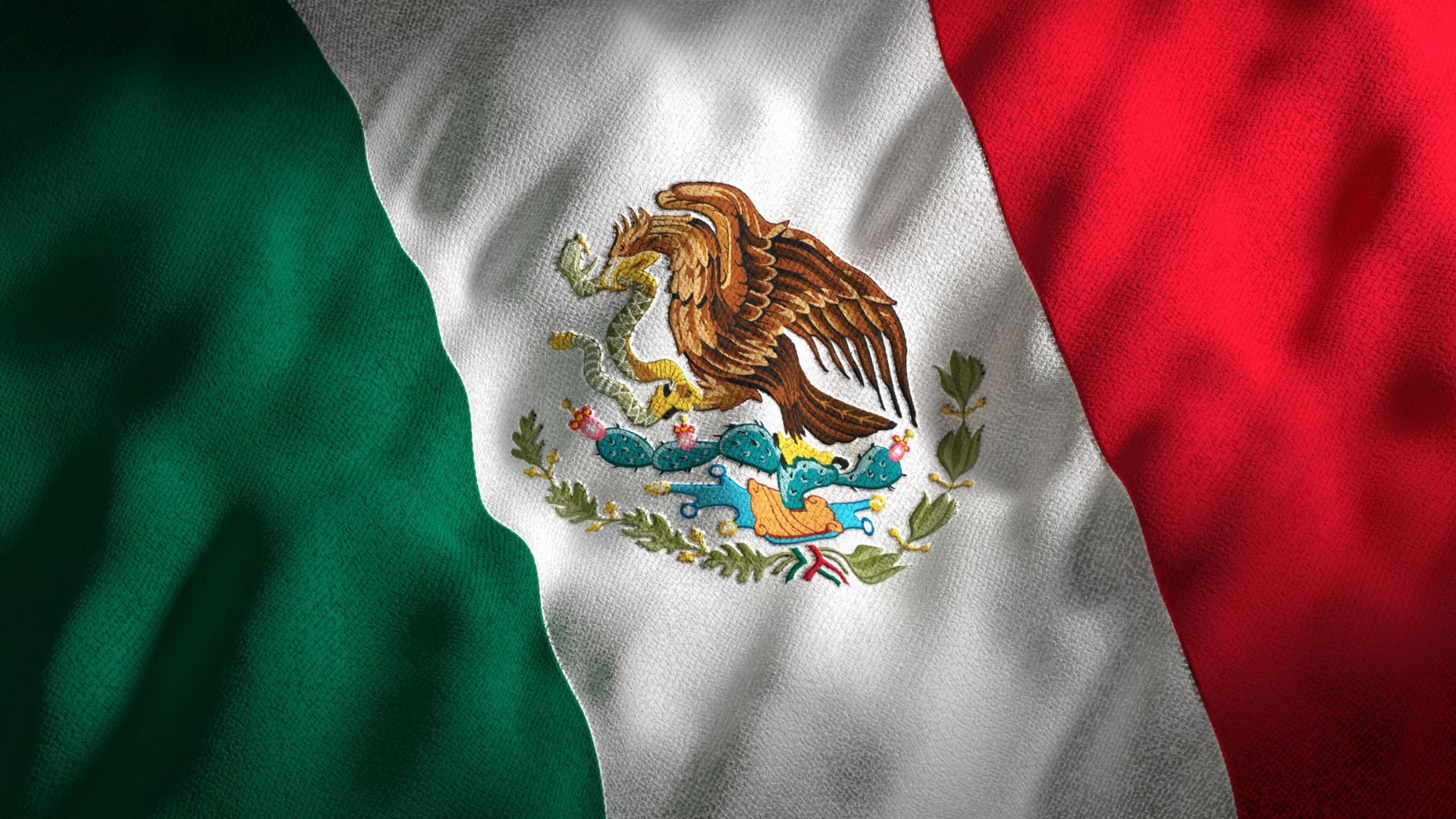
The nopal isn’t just food, it’s national identity growing out of the ground. That iconic image on the Mexican flag of an eagle perched on a cactus, clutching a serpent. That actus is a nopal. In 1325, Aztec legend says the gods delivered a prophecy… The great city of Tenochtitlán would be founded wherever an eagle was spotted perched on a nopal, devouring a serpent.
Source: canva.com
For the Nahua peoples who named it, the plant was called “Nohpalli” in Náhuatl, meaning “the tree that bears tunas.” Cosmically speaking, its roots reached down into the underworld while its fruit stretched toward the heavens. Even the dry stalk, too bitter to burn as ordinary firewood, was lit to produce the thick, billowing smoke that announced the sacred New Fire ceremony. This plant wasn’t background scenery; it was the ceremony.
The Nopal, The Original Mexican Superfood
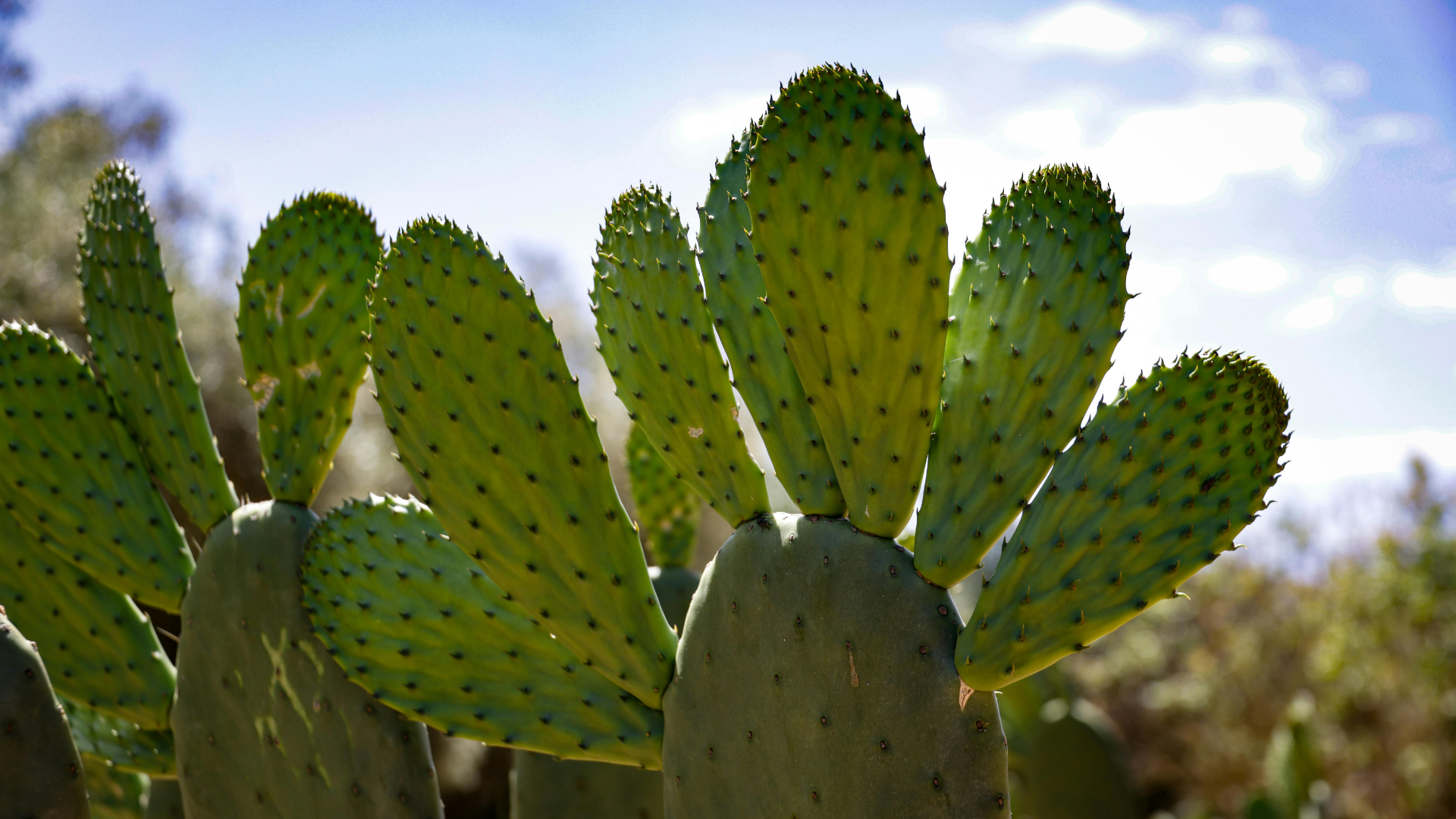
Let’s talk nutrition, because the nopal is genuinely impressive. Packed with fiber, calcium, potassium, magnesium, and vitamins A, C, and B-complex, it reads more like a multivitamin than a cactus. Because of its high vitamin C content, nopal would later become valued as a nutritious food during long journeys, and Spanish explorers eventually introduced the plant to Europe, where it spread widely and is now used in several regions to help combat desertification in arid environments.
Source: canva.com
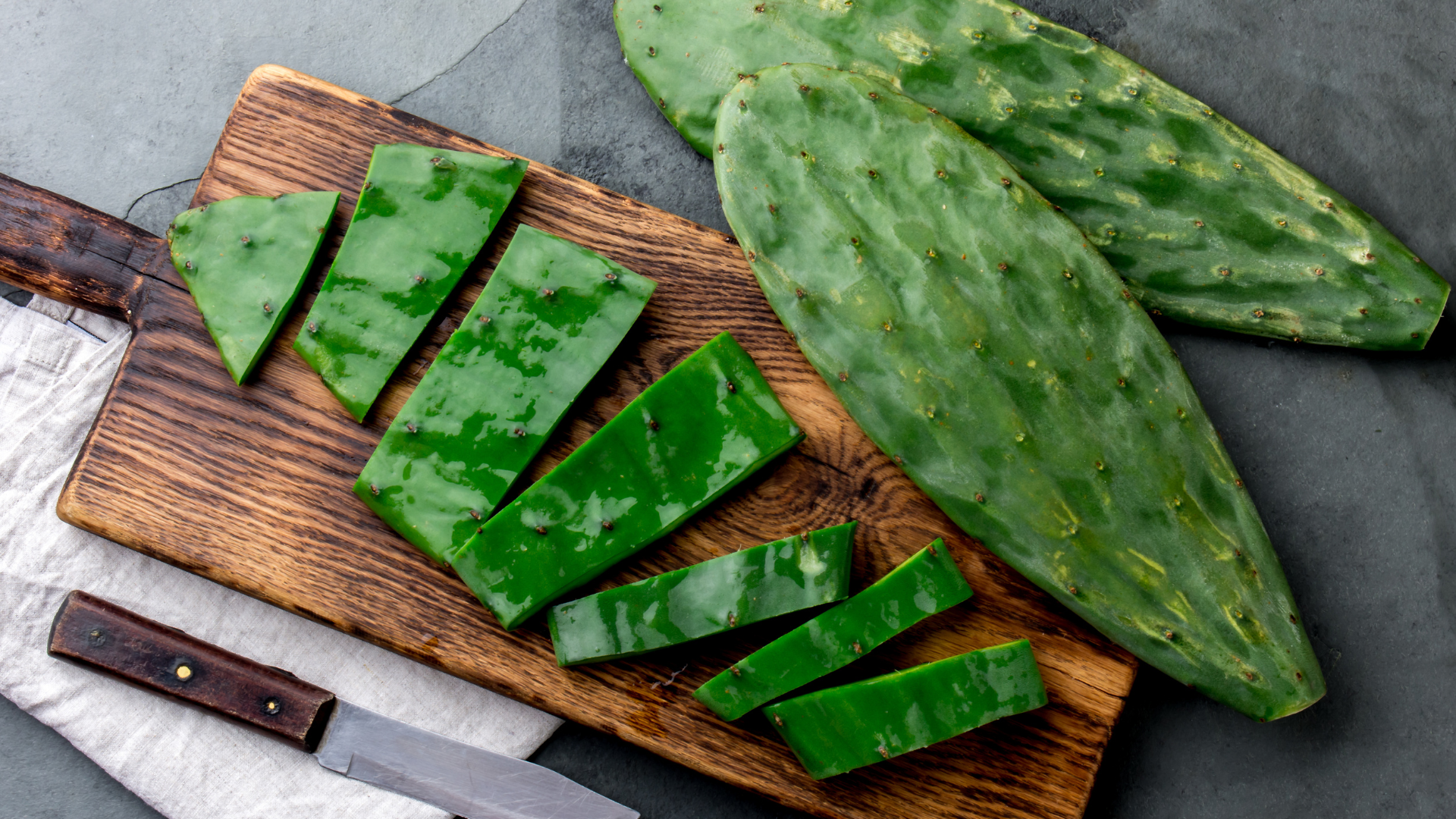
On the health side, nopal has been studied for its potential to help regulate blood sugar levels, support healthy cholesterol levels, soothe the stomach lining, aid digestion, and promote a feeling of fullness, making it a quiet warrior in the fight against obesity. That characteristic sliminess you notice when you cut into it, that’s the “mucílago”, or natural gel, which the ancient world used medicinally for everything from soothing new mothers to making a moisturizing cream, mixed with insect fat for cracked hands, feet, and lips.
Nopal’s Role in Mexican Cuisine
Nopal has been a kitchen staple in Mexico since Mesoamerican times, and the options are endlessly versatile. You can grill it until it gets that gorgeous smoky char, boil it into soups, slice it raw into a bright salsa, pickle it, or blend it into a jugo verde. The flavor is mild and a little tangy, somewhere between green bell pepper and okra, with a texture that softens beautifully when cooked.
Source: canva.com
Ancient Mexican kitchens were already getting creative with nopal, usually served alongside venison, turkey, or fish, tossed with ant larvae “azcamolli”, or folded into flower salads. The prickly pear fruit was eaten fresh off the plant, turned into syrup, aged into a cheese-like preserve called “queso de tuna”, or fermented into beverages made from the fruit.
Today, it’s common to find scrambled eggs with diced cactus, nopales salad loaded with tomato, onion, and cilantro, stuffed cactus, or nopal tucked into stews. And beyond the paddles themselves, we have the fruit, the sweet, jewel-colored “tuna” and the tart, punchy “xoconostle” are their own universe of flavor.
The Toughest Plant in the Room
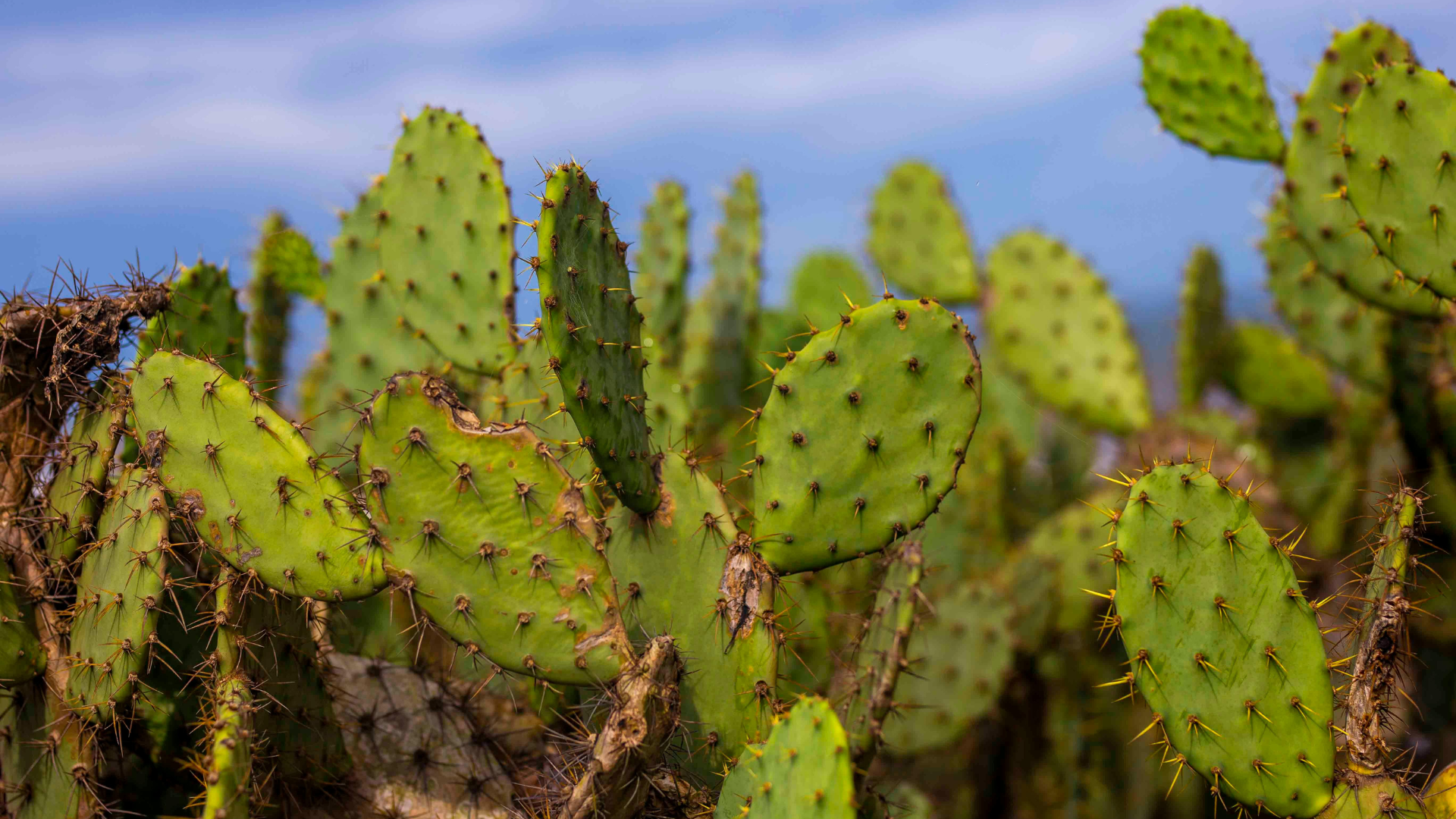
Ecologically, the nopal is nothing short of extraordinary. It thrives where almost nothing else will, on rocky hillsides, sandy soils, brutal droughts, and baking heat. Its secret weapon is a specialized process called CAM metabolism (Crassulacean Acid Metabolism), which lets it open its pores only at night to absorb CO₂, keeping them sealed during the day to prevent water loss. Its wide, shallow root system catches every drop of rainfall efficiently, and its roots anchor the soil against erosion. Even when a paddle is cut off, the plant simply seals the wound and keeps growing.
Source: canva.com
Mexico alone is home to dozens of wild nopal species, and through thousands of years of cultivation, humans have developed many additional varieties, a staggering agricultural legacy you can appreciate just by wandering through any Mexican market between April and December, when the paddles and fruits run the full spectrum from yellow-green to deep red-purple.
More Than Just Dinner
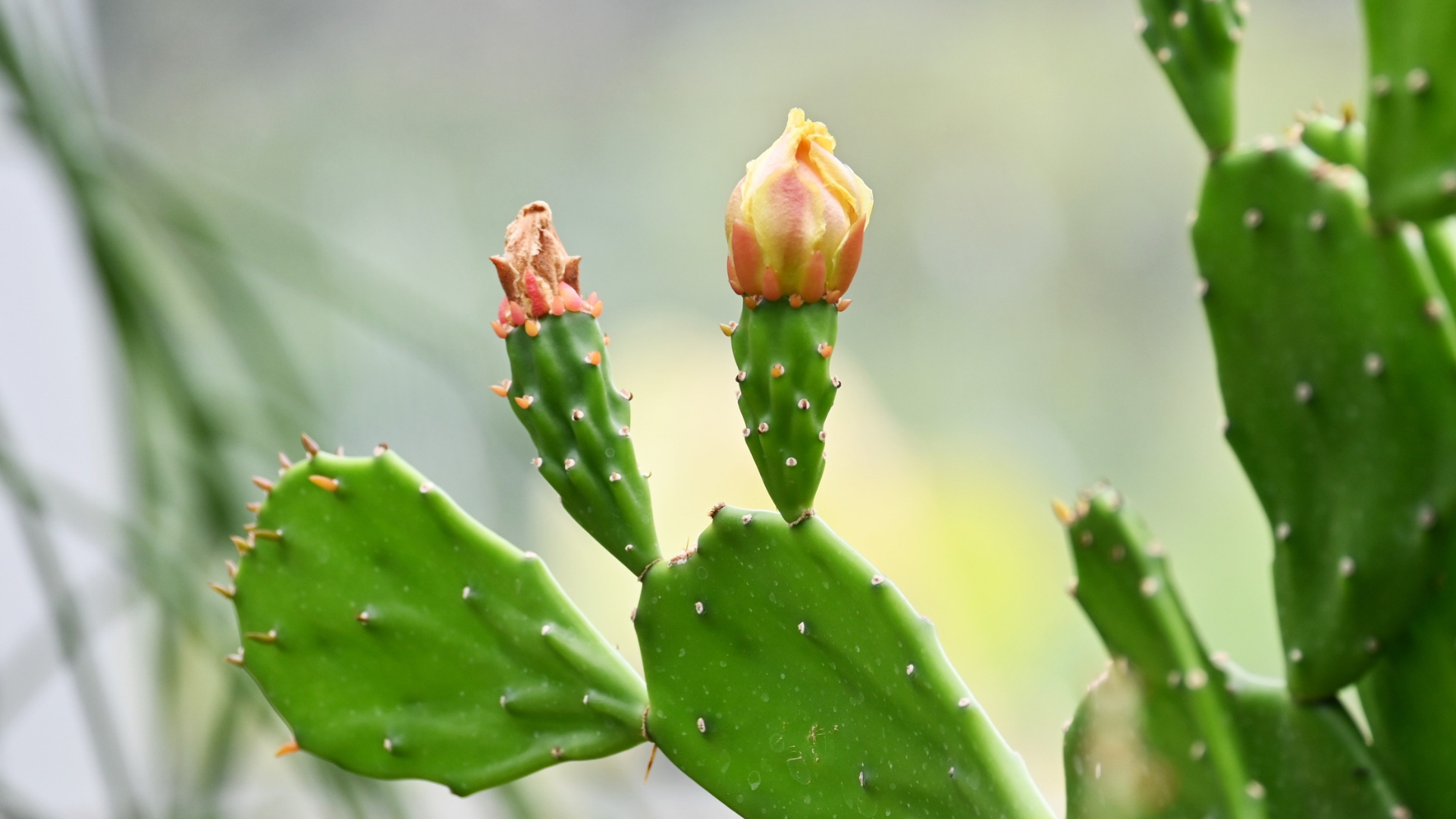
The nopal’s influence stretches far beyond the plate. The “cochinilla”, a tiny insect that lives on the cactus, produces one of the most prized natural dyes in history. When crushed, it yields a vivid crimson that ancient peoples used to paint skin, dye textiles, and decorate ceremonial objects. The Spanish quickly recognized its value and exported it to Europe, where it colored luxury fabrics and even appeared in masterpieces of Renaissance painting. The nopal’s natural gel was also used to help fix dyes in fabrics and murals, clarify murky water, and serve as a binding agent in adobe mortar.
Economically, the nopal remains a powerhouse. Mexico City, despite being the country’s smallest and most densely populated territory, is one of the largest producers of cultivated nopal in the nation. The borough of Milpa Alta alone accounts for the vast majority of the capital’s harvest, with thousands of hectares dedicated to nopal cultivation. Production supports entire communities, with women and men working side by side across supply chains that stretch from small family farms all the way to Mexico City’s massive Central de Abastos market.
Source: canva.com
The nopal has survived empires, colonization, and centuries of change. It fed gods and soldiers, farmers and city dwellers. It built murals, dyed textiles, and quite literally shaped a nation’s flag. And today, it’s still showing up on the grill at your neighborhood taquería, in a cold glass of green juice, or growing wild along a dusty mountain road.
If you haven’t given nopales a place in your daily diet, now is the time.
Next time you book a Food Tour with Eating With Carmen, you might have the chance to try a nopales quesadilla, or nopales as garnish for your tacos.
- Abbey